Sunday, March 04, 2007

New Year: Burning Life-Sized Dolls

Ecuador has many rituals related to bringing in the New Year, one of them includes the creation of and burning of large paper-mache effigies.


The "muñecos", or dolls, as they are referred to here, are made in the shape of famous people, cartoon characters, politicians, athletes... or yourself, family and friends!

Here Yana, from the University of Chicago Global Village group which built in Guayaquil, holds the hand of Ecuador´s newly inaugurated "President Correa." (the other guy , Naboa, won in Guayaquil) This particular muñeco is small in comparison to many others I saw during the next few days!


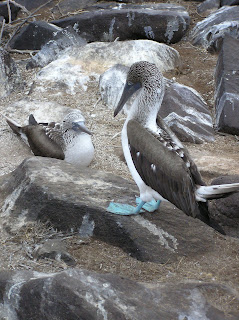
James flew into Guayaquil to spend New Years with me, and after we spent about a day there we traveled to the coast. We began in a small fishing-tourist village called "Puerto Lopez" (also the departure point for "Isla de la Plata", see post on Blue Footed Boobies- Prelude to Galapagos).

On the way out of town we witnessed many muñecos being transported out of the city for peoples New Years Celebrations. Here is the Incredible Hulk, tied to someones truck! The idea of the dolls in the shape of politicians and sports celebrities is that you get to burn a team that you don´t like, or a political figure... I didn´t really get the idea of burning the super heroes! I think James and I saw ... at least 5 or 6 Supermen. Here is the "squirrel " character from the Ice Age movie. This particular muñeco was driven all over town many times even though Puerto Lopez was his final destination. It seemed as the time grew near for their incineration, the dolls were moved to more prominent locations or taken for a spin!..

So, for those interested in making their own muñeco... and I considered it, you only have to worry about making the body (that is, if you are sticking to human forms). That is because your local stores are tuned into head salesmen! For all those head-hunters out there. Here is James hanging out with the selection of heads on the "main road in Puerto Lopez. The heads seem rather pink don´t they? So, the kind of doll that was made to look like you, or your family or other local people had a different context. Usually these dolls were accompanied with long written explanations of things that had happened in the last year that were lamentable, or that a person was pledging to not have happen again. Many times the statements included inside jokes and references to very confusing instances...
Here I am with a neighbor boy and his family´s group of four muñecos, playing cards.

Muñecos representing US President Bush and Vice President Cheney were burned by the most popular hostel on the Puerto Lopez coast. They were displayed holding weapons at the hostel entrance until close to midnight when they were taken to the beach for a bonfire.

James and I tried to bring in the New Year 2007 with an Ecuadorian Champagne... however when we went to "release" the celebratory cork... all pressure had long since dissipated! this did not damper our spirits however, we quickly recovered from the comic disappointment and got in some dancing at the local block parties:-).

Galapagos: Arid, Aquatic Christmas

Out of nowhere, a week opened up in my schedule around Christmas - the perfect amount of time to go on a 7-8 day Galapagos boat tour. Here the view from the top of Bartolome Island, taken towards Santiago, or James, island. I flew from Guayaquil, Ecuador, where I had been with University of Chicago students (see last blog), to Baltra, Galapagos. My tour was on a "economy" class tour--- visiting the Galapagos is expensive in any way (the park has a $100 entrance fee for anyone who is not an Ecuadorian citizen, then there is the most expensive available domestic plane ticket and tour costs).

The animals and landscape were bizarre, and memorable. Here is a "Sally" Crab, which will eat its mate if it is larger (the male will eat the female, or the female will eat the male). Sometimes the the mate gets away with only one appendage eaten, like this one!

The marine iguanas of the Galapagos are particularly well known. They sleep on land and hunt in the ocean. They are great divers and can swim distances if necessary. Usually the iguanas are scavengers and vegetarians, however one was recently documented actually attacking and killing a live octopus! Here is a close-up of a marine iguana.


The boat I lived on for those 7 days is named the "Poseidon". Usually the Poseidon has 10 passengers and approximately 5 crew, including our bilingual naturalist guide. This trip, however, was "special", according to Jon, our guide.


A group of 7 passengers somehow where not able to get on their international flight to arrive in Ecuador. Thus, we were a group of three with the boat and guide to ourselves! Three days later we picked up three people and dropped off one, making us a group of five. I can´t imagine what it would have been like if there HAD been 10 people, the quarters already seems cramped! Here I am in my "two person room."

Each day we would have at least a morning and afternoon activity... or several morning and afternoon activities. We went on hikes, small boat rides into tidal waters, went kayaking and did a lot of snorkeling.


The snorkeling was my favorite and was when I got to swim with penguins! I also swam with sea lions, sharks and many.... many fish!
Sometimes we swam with schools of thousands of fish- I wish I had an underwater camera to have documented those experiences!

The Galapagos penguin is its own species which can withstand the warm temperatures of the Galapagos land and water. Here they are swimming in a pack and looking for food.

The penguin is at great risk of going extinct, however as during the last, "El Niño" year, the populations dwindled and would not survive another if they are affected in the same way.


Here are some sea lions on land, a baby and its mother.
We also swam and snorkeled with many female and young sea lions. The sea lions are very curious and playful and like to swim around people from below... above the side... you wouldn't know where they might appear from!

Before I arrived in the Galapagos I read a whole natural history book about the islands, their animals, geology, human history and current politics. I was so glad I did, as I was able to add to an better contextualize the experience I had with my islands tour.


While I was in the Galapagos, it was turtle mating season, and Blue-Footed Boobie mating dance season... Above two green turtles (who actually may be a different species, endemic to the Galapagos, the "black turtle"), mate while close to shore. Below a male and female Blue Footed Boobie. Unfortunately my video clips of the mating dance will not load on this site!Some of the other birds we witnessed were albatross (below), which was completing its mating season....

and masked boobies.
Here is a cactus that has grown a trunk to protect it from the land iguanas. Interestingly, only a sterile hybrid, a cross between the marine iguanas and the land iguanas, which only occurs on one of the Galapagos Islands, is able to climb the cactus! You can tell the hybrid is present when the cacti has bites out of its... and they haven't yet fallen to the ground.


In the above pic, a land iguana guards its territory and waits for its favorite food, the fruit of the cactus, to fall.The land iguana will wait months for this to happen! In the meantime they also eat other vegetation and other pieces of cactus.


One of the most different looking islands was ... which was covered in the tree-cacti and a strange red ground cover. It reminded me of a Dr. Seuss landscape. Here is a close-up of the red ground cover.

We visited the Charles Darwin research center for one afternoon of our trip, and witnessed the Center's breeding program in action. The center breeds and releases tortoises to several of the islands. The baby turtles are maintained separate based on their island of origin because the tortoise species has now differentiated into distinct sub-species. The tortoises were in need of a breeding program after feral goats had eaten much of their food sources. The Galapagos National Park now has feral goat eradication programs underway, and some have been completed.


Here is an adult tortoise, I think he looks like ET. One of the adult tortoises at the Charles Darwin Center is "Lonesome George", the last known of his sub-species. There is a huge financial reward being offered for anyone who can locate another of his kind. During the early 1900s, tortoises were removed from the Galapagos and sold all over the world as a kind of unique lawn ornament. So far no one has come forward with a mate for George. The center is trying to breed him with the most similar sub-species that exists, but George is not interested.

My roommate in the Galapagos was a Swedish girl named Marie who I am planning to have dinner with tonight in Bogota. She is working for a Swedish agency which provides an international presence to non-governmental organizations in Colombia.

One of the most entertaining, and ridiculous aspects of the trip were two German girls who got on the boat on Christmas eve. They demanded a special Christmas "program" for the next day, during which, they informed everyone, we would have to all sing Christmas carols in our respective languages. We tried this, however I knew more words to the Spanish Christmas Carols than did the crew and our guide, and I didn't know all of them. Also the Swiss guy and Marie did not participate.They brought a small Christmas tree and some other decorations, and gifts for each other and demanded that the cook make something special for Christmas dinner. Above they are posing with their Christmas tree. The girls did not stop their complaints and demands at Christmas- They were upset that the English/Spanish speaking guide didn't know the names of seabirds in German, didn't want to hike some of the island trails, and their opinion of the boat was very low... they couldn't imagine how 10 people could fit on such a boat.
Another point of interest for the Galapagos, at least for me, was that I became quite sick. I wasn't sea sick, I started with a fever the first night and things just got worse until I finally visited the Hospital on San Cristobal, one of the more inhabited islands. I started to get better on Christmas day. If I hadn't started feeling better I likely would have flown back early. Luckily I only missed out on about a day's worth of activity.

Despite being more sick than I think I have been in my whole life, the experience was amazing. If I ever go back it will be for the SCUBA diving (now that I am certified!) and to go check out the tortoises in their mountainous habitats up in the island volcanoes.

When U. of Chicago Hit Guayaquil

Guayaquil is Ecuador´s largest city with over 3 million people (of the total 13.5 million Ecuadorians), and one of the three locations that Habitat for Humanity Ecuador builds.


Danit´s Team


Daniel (new Global Village Coordinator) and I (see below- he is usually happier... but I think this photo is pretty funny!) took a 5 hour bus from Santo Domingo to Guayaquil- leaving Amanda and Lisa´s Global Village group in the morning and meeting with Danit´s University of Chicago Global Village group that night!
The ten University of Chicago students arrived LATE on Saturday night. We didn´t meet the group until after 1am when they finally came out the international arrivals door! The students had just begun their winter break and would spend 5.5 days building and then spend a few days on the coast.


What a positive energy group! Daniel and I had been a bit worried after some horror-stories about other student group that came to Ecuador to "work with Habitat", who did not create such a good reputation for future groups. We knew right away however that this group would set the record straight about how awesome volunteer university student groups can be. Most of these students had been involved in projects locally with Habitat and other building groups.. .and many had traveled to the US South to help out in areas hit by Hurricane Katrina.

After the late arrival Sat we all had a day to relax in Guayaquil before the work week began. Here are Jayce, Race, Danit and Emerson enjoying the warm Guayaquil weather and the view of the river from "las Peñas" a small "mountain on the Guayaquil coast with lots of shops, restaurants and some museums.

Above are pictured a view from Las Peñas and the "Malecon 2000", which is the renovated boardwalk which was completed in 2000.

Our hotel, the "Rizzo" was located right next to "iguana park" also known as "Parque del Santuario" and by other names. The park is filled with iguanas- on the ground, in the trees, on the statues and crawling the paths. Above, Lee and Emerson hang out with a local boy, (who seemed to live in the park~!), and a large iguana.
U. of Chicago's group of ten worked on two houses in planned municipality neighborhoods for low-income housing. The Habitat houses there cost approximately $4,500 once the future owner acquires land and are the most affordable of any housing being built in these neighborhoods.
Above, Jayce works on sealing the concrete on a new wall. Below is the team from Daniel's site: Jayce, Emerson, Hallie, Lee and Danit.


Here's the team from my site, our maestros and the future owner. From the left, a maestro, the home owner, a assistant maestro, Bernardo (Guayaquil Director for Habitat), Shira, Julia, Neetu, Yana, another assistant maestro and Race.These houses were the standard 6m by 6m by 6m design currently being built by Habitat in Ecuador. Once the family pays off 80 percent of the no-interest loan, they are eligible for some additional floor space and bigger loan.

Here Emerson prepares here mortar palette.

Here Danit and Lee screw around on the work site... don't worry they didn't do TOO much of that:-). They are the president and vice president of their Habitat student organization!
Here they are at work with Jayce, creating the "chains" which create the foundation structure for the house.

Both houses started almost from ground zero, however Daniel's site already had the footings dug. My site however, which was composed of dirt as hard as concrete, was started the day we arrived with us using pick axes and shovels to break through the dirt.
We came along way that week and by Friday and Saturday, the walls where about halfway finished! Here Neetu works on smoothing one of our first walls.

Since U. of Chicago's visit, both John Hopkins University and University of North Carolina have arrived in Ecuador with Global Village teams as well!- I was not able to travel with either of these teams however, as I was with another Global Village teams or out of the country.

Kudos to all the University students participants! U. of Chicago, you guys were awesome! Keep up the good work!

Saturday, February 24, 2007

Update: in Colombia

Here is a quick update on the travels. Johanna came to Ecuador to visit and we spent three days in Ecuador before flying to Cartagena, Colombia. We spent a few days there before heading to Taganga and Santa Marta Colombia, where we are now.

We are getting our open-water SCUBA certification in Taganga and generally getting to know the area, then next week we are heading to Bogota! So far everything has seemed relatively safe, we took a bus from Cartagena to Santa Marta and have not done anything too crazy;-).

I will be back in Ecuador after the 9th of March for one week of another Global Village Habitat Group, and then for my last week in the country!- it looks like my dad may join me those last two weeks.

Unfortunetly it has been difficult to load and find time available to post most info that has happened since mid-December, including the Galapagos, travels with James, and Ron and Glorias Global Village group---but I hope to catch up when I am alone and with a better internet connection in Bogota!

Salud!
Erin

Friday, February 16, 2007

6 months -1 year Volunteer Opportunity in Ecuador!

Interested in taking my job here in Ecuador?

Know of someone else who might be a good candidate? The position is an IVP ("international volunteer program"), "special project volunteer" opportunity which is offered through Habitat for Humanity International at this website.

I am leaving the country towards the end of March after my 6 month stint, and the position is posted on the Habitat for Humanity international website! There are also opportunities in other countries and with different responsibilities.

The next person will be continuing the work I started: program development in all areas of volunteer mobilization, and assisting with coordination of Ecuador´s MANY Global Village teams. The position is based out of Quito, but have many opportunities to travel.

Questions? Feel free to contact me.

Wednesday, February 14, 2007

"Un besito, choa choa", things are different here;-)

For awhile now I have been meaning to write about some of the basic interpersonal interactions and the morning ruteine that differ from what I was used to when I arrived.

Simple things, for example arriving at work and greeting your coworkers. At the Habitat office, whoever arrives first has the least amount of greeting to do! When you arrive you may set your things down or make a cup of coffee (more on the type of coffee you are going to drink later!). Then you make a "round" of the office to see who else has arrived... it may be everyone, or a few people. Each person you greet with a "besito" (little kiss) on the right check. If you are male, you greet other males with a handshake. If you are female, you greet everyone with a kiss. If you are already sitting, you can stay sitting and the greeter bends for the "besito." The end of the day is generally the same... although, if you are in a hurry, you may not make a round of the office but rather only give "besitos" to those in your area of the office, or to those you pass on your way out of the office.

Regarding the coffee: this is a painful topic ;-(, as, even though Ecuador is a COFFEE PRODUCING country, instant coffee is consumed everywhere and Nestle is a brand of choice. If coffee is "real", it is called "cafe pasada", literally "passed coffee", meaning that it is passed though a filter. Some Ecuadorians tell me that about 50 percent of nationals will drink "passed" coffee and that the other 50 percent will drink instant. In the Habitat office, we drink instant... and although it was almost unbearable at first I have become used to it! The theory as to why the instant coffee may be popular is that it is a secondary product of coffee, making it seem like a more refined or sophisticated product. Similar to this is the almost exclusive consumption of white rice and white sugar.

When you hear someone here talking on the phone, or in person, to friends, family etc, it is not uncommon to for phrases like ¨luz de mi vida¨ (light of my life) or "mi amor" (my love), to be intermixed in the conversation in reference to the other person. When saying goodbye on the phone, a woman might say "un besito, choa choa!" (a little kiss, bye-bye!).

Friday, February 09, 2007

Quito from 15,100+ feet

Last weekend I did something I had wanted to do since my second week in Ecuador: I climbed the 15,100 foot mountain that overlooks Quito. Here is the view of the city from on top!
Here is a pic from September, when I first went up the "Teleferico", the cable car which takes its passengers to just over 13 thousand feet.
That weekend that weather was REALLY cold (note the snow!--- which is very rare here, even at this altitude). The weather was only one of the reasons I didn´t climb the mountain that weekend.

This time, I once again rode the Teleferico. I met some other hikers, two from the US, two from Germany and one from Quito. We all took one of the first cable cars to the start of the trail (9am). The two guys from the US, Kalon (Mississippi) and BJ (Kentucky), let me join them in their trek to the top of Rucu Pichincha. Here´s a pic of Kalon and BJ.Although Rucu (old one) Pichincha is not as tall as GuaGua (Baby) Pichincha, the hike is longer. Apparently you can almost drive to the top of Guagua- which is the still active, growing peak of the Pichincha Mountain (Volcano). Here is a pic of the Guagua crater from Rucu peak.
Guagua erupted in 1999 and Quito was covered in ash. It is expected to erupt again someday, but it will erupt in the direction away from Quito.Here is a pic of the Rucu peak taken from the trail. The surrounding landscape is called "paramo", and is found in Ecuador, Peru, Colombia and Venezuela at 12 thousand to 14 thousand feet. It is characterized by low-lying plants and bushes and plants with amazing adaptations to the high altitude, strong winds, cold, the extreme sun and the often cloudy climate.Here is a really cool low-lying plant that covers some rocks ... I remembered it from trekking through the Andes in Peru as well.


I kind of feel like a smurf while traversing land coverings like this!These beautiful flowers covered some of the hillsides and the plant´s leaves have a waxy, protective coating. As the flowers mature they turn into wind-blown distributors of seeds, similar to dandelions.This plant, above, I originally thought was covered in spider webs. However, the cobweb like substance is actually part of the plant and appears to be a protective coating from either plant-eating animals or the harsh climate.

The hike to the summit lasted between 3 and a half and 4 hours. The primary trail splits for the last hour and a half of the climb into two trails: one that apparently includes thrills and chills and maybe you should have ropes for... and the other, which I did, involved a bunch of steep trails on sand. Kalon decided to try the more adventurous-deadly route and BJ and I opted for the difficult but soft-landing route.

We all made it to the top at about the same time. Here we are at 15,100+ feet.. we arrived around 1:30pmish and stayed until 2:30pm when the clouds began to accumulate and the temperature dropped.
On the way back down we noticed these beautiful purple flowers (below) that we hadn´t seen before. Behind the flowers on the hillside are what appear to be some sort of containment barriers (to prevent erosion? transfer water flow for other use?). They are not modernly used for anything and although upon first glance I thought they were part of a city project to prevent erosion, closer inspection proved that they were quite old. The Quiteño we asked said that there are many "stories" about where they came from... including that the aliens brought them!


From